Comet
The Painted BirdThe Comet is a homemade portable stove whose small flame becomes a source of food, warmth, protection, and mobility for The unnamed boy narrator. Made from a perforated tin can and swung by a wire handle, it converts a scarce, carefully tended fire into something he can carry through forests, villages, and winter weather. Its practical usefulness is inseparable from its narrative force: when it burns, he can keep moving; when it goes out, his hard-won security collapses.
Construction and Operation
The Comet’s basic construction is simple but specific. Olga the Wise One describes a one-quart preserve can, open at one end, with small holes punched into its sides and a three-foot loop of wire attached at the top. The wire serves as a handle, allowing the can to be swung like a lasso or a church censer. Its portability does not depend on a conventional fuel chamber or a controlled draft: the user swings the can to pump air through the holes, while centrifugal force keeps the fuel inside. A live bed of embers must remain at the bottom, and the swinging motion and choice of fuel regulate the heat.
That adjustable fire makes the device a miniature kitchen. Peat and damp leaves provide a slow heat for baking potatoes, turnips, or fish; dry twigs and hay give the hotter flame needed to roast a freshly killed bird; potato stalks are used to cook eggs taken from nests. These are not interchangeable recipes so much as a practical knowledge of how fuel, moisture, and motion work together. The Comet extends cooking beyond the hearth, letting its carrier prepare food while away from shelter.
Keeping it alight overnight requires a different technique. The can is packed with damp moss gathered at the bases of tall trees. The moss burns dimly, giving off smoke that repels snakes and insects. When a stronger flame is needed, a few swings can bring the fire to white heat. Weather alters the work: wet snow calls for frequent refilling with dry resinous wood or bark and vigorous swinging, whereas hot or windy conditions require less effort. Fresh grass or a little water can slow the burn. The device is therefore portable, but not effortless; its usefulness rests on constant attention and skilled adjustment.
Fire, Scarcity, and Folk Belief
The Comet’s dependence on a living ember makes fire conservation a matter of survival. If carelessness, sleep, or a sudden downpour extinguishes it, replacing the flame is difficult in a region where matches are scarce and costly. People who possess matches split them in half to make them last. In houses, families bank ashes in stoves or ovens overnight, then make the sign of the cross before coaxing the embers back to life at dawn. Fire is treated as something that must be humored rather than trusted: folk beliefs warn that borrowing it brings misfortune, carrying it out of a house can affect a cow’s fertility, and an extinguished hearth may bring disastrous consequences during childbirth.
The Comet makes these beliefs portable as well as practical. It allows someone to approach settlements guarded by packs of dogs, and in winter it can mean the difference between having warmth and cooked food and risking frostbite. People carry small sacks for its fuel, gathering supplies while working in fields or returning home. At night, men and boys swing the cans so they arc through the air like red disks with fiery tails. The name links an ordinary piece of scavenged metal to a spectacle in the sky; in Olga the Wise One’s explanation, the appearance of comets foretells war, plague, and death. The image thus joins a useful technology to the region’s atmosphere of danger and superstition.
The cans themselves are scarce. They are found along railway tracks used by military transports, and local peasants prevent outsiders from collecting them, charging heavily for cans they find. Communities on opposite sides of the tracks compete for them; teams of men and boys search with sacks and carry axes to deter rivals. The object’s modest material value is therefore amplified by its direct relation to heat and survival. Access to a can is not simply access to a cooking utensil but access to a means of remaining alive and independent beyond the household.
The Boy’s Portable Security
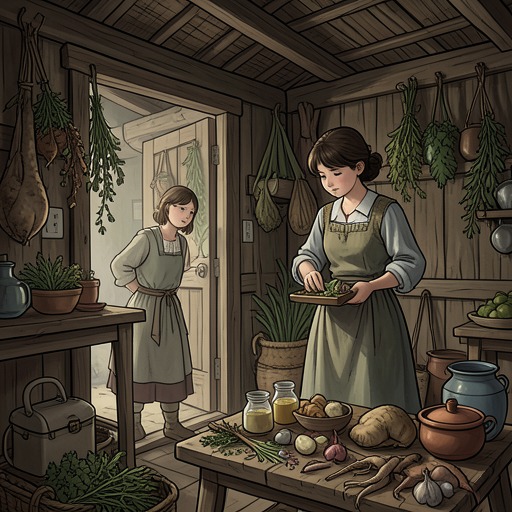
Olga the Wise One gives The unnamed boy narrator his first Comet in payment for treating a patient. He cares for it attentively, hammering down holes that threaten to widen, flattening dents, and polishing the metal. Because it is his most important possession and might be stolen, he winds part of its wire handle around his wrist and does not part from it. He also learns to keep suitable fuel in his sack. When Olga sends him into the woods to gather medicinal plants and herbs, the fire can make him feel safe away from people. Its warmth and brightness offer a practical reassurance that the landscape itself does not provide.
When he becomes separated from Olga the Wise One, he finds himself without the Comet and experiences the absence as a loss of protection as well as heat. Cold, fear, and the unfamiliar sounds and shapes of the riverbank intensify his sense of isolation. The contrast clarifies what the object has come to mean: it does not remove danger, but it gives him a tool with which to answer it. During a later encounter with herdsmen, he provokes a commotion among their cattle, frightens the group, takes one man’s Comet, and retreats into the bushes. The episode shows that the device is valuable enough to seize, and that possession can change the balance between a solitary boy and people who might otherwise threaten him.
In winter, a Comet allows him to travel from village to village wrapped in rags, rabbit fur, and horsehide, carrying a sack of fuel that he replenishes with branches, bark, peat, and moss. He uses it to bake potatoes and beetroots stolen from snowbound barns and to frighten away dogs sent after him. At night, he sleeps beneath tree roots under a roof of snow, burning damp peat and rotten leaves in the can to keep his shelter warm. For a time, snow keeps people inside and lets him move almost unseen. When milder weather brings the peasants out and dogs roam again, that arrangement becomes less secure; the Comet remains essential, but cannot make the countryside safe indefinitely.
A Tool for Escape and Defense
The Comet also gives The unnamed boy narrator a way to confront immediate threats. When a crowd approaches the farm where he has sought refuge, he rushes to the kitchen for glowing coals and carries them to the barn. He lights a fuse attached to homemade soap explosives with the Comet, hides the device beneath broken farm implements, then escapes through an opening in the back wall and across the wheat field. The explosion destroys the barn. In this episode, a tool ordinarily used to preserve life becomes part of an escape that leaves destruction behind; the same ember that cooks food also enables an act of desperate defense.
Later, after deciding to leave a village, he goes to Anulka’s hut at night in search of a Comet. He frightens her outside, slips into the room, takes an old can by the stove, loads it with burning cinders, and runs toward the forest. The scene repeats the pattern of fire acquired under pressure: instead of receiving the object through Olga the Wise One’s care, he takes it because departure without a live flame would be dangerous. The Comet is both an object of attachment and a resource he must obtain again when circumstances change.
He prepares another form of escape for the ice. Having made skates from long pieces of wood and thick wire, and boots from wooden soles, rabbit skin, and canvas, he attaches them at the marsh’s edge, hangs the burning Comet over his shoulder, and spreads a canvas sail above his head. Wind pushes him across the frozen surface, carrying him away from the village. For a time, the combination of skates, sail, and fire produces a sense of freedom and solitude. But when he stops to rest, the Comet has blown out; no spark remains. He cannot return against the wind and does not know whether farms are nearby or whether anyone there would shelter him. The device’s failure abruptly changes flight into exposure, making its dependence on a maintained ember unmistakable.
Loss, Memory, and Significance
The Comet’s recurring appearances give it more than one function. It is a stove, a guarded possession, a deterrent, and a means of escape, but it also marks the shifting limits of the boy’s independence. When he has fuel and a live ember, he can cook, sleep outside, approach settlements, and cross threatening spaces. Yet its protection is conditional: rain can extinguish it, wind can blow it out, and its scarcity can force him to steal or compete for another. Its usefulness depends on metal, fuel, weather, and care, not simply on the boy’s determination.
After Labina dies, he fills his Comet with smoldering embers, takes the patterned tie she had hidden beneath the bed, and leaves. The object accompanies another departure, now alongside a keepsake linked to the dead. Across these episodes, the Comet connects ordinary acts of maintenance with moments of crisis. Its small, managed fire cannot undo isolation or ensure welcome, but it gives the boy a measure of agency in a world where shelter and safety are repeatedly withheld. The moments when that fire disappears reveal the precariousness that its steady glow had temporarily concealed.